What is the Emerald Ash Borer and Why is it a Threat in Halifax
The Emerald Ash Borer (EAB) is an invasive beetle that has devastated ash tree populations across North America since its discovery in 2002. This metallic green insect, native to Asia, feeds on the inner bark of ash trees, disrupting the tree's ability to transport water and nutrients. Once established in a tree, EAB larvae tunnel through the wood, creating extensive damage that typically results in tree death within three to five years of initial infestation.
In Halifax and the surrounding region, EAB has become an increasingly serious concern for property owners. The pest spreads through the movement of infested firewood, nursery stock and tree debris, making it critical for residents to understand the risks and take preventive action. Many ash trees throughout Halifax are already showing signs of infestation, and without intervention, the problem will only worsen. If you suspect your ash trees may be affected, early detection and professional assessment can make the difference between saving a tree and losing it entirely.
Identifying EAB Signs and Symptoms on Your Ash Trees
Recognizing the early warning signs of Emerald Ash Borer infestation is essential for taking timely action. One of the most distinctive indicators is the presence of D-shaped holes in the bark of affected trees. These small exit holes, typically about 3 to 4 millimetres in diameter, are created as adult beetles emerge from the wood. Unlike round woodpecker holes, EAB exit holes are distinctly D-shaped and are often found in clusters on the trunk and branches.
Beyond the characteristic D-shaped holes, watch for additional symptoms that suggest a dying ash tree. Canopy dieback, where branches progressively lose foliage starting from the top, is a common sign of advanced infestation. You may also notice vertical cracks or splits in the bark, underneath which you can sometimes find S-shaped larval galleries if you carefully peel back the bark. The tree may produce excessive epicormic shoots (small sprouts growing directly from the trunk), which is the tree's stressed response to damage. Thinning canopy, sparse foliage and general decline in vigour are later-stage indicators that the infestation has progressed significantly.
If you observe any combination of these signs on your ash trees, contact Citadel Tree Trimming at (902) 700-2952 for a professional evaluation. Early diagnosis can open up treatment options that may save your tree.
Treatment Options to Save an Ash Tree in Nova Scotia
If EAB infestation is detected early, there are several treatment strategies available to save an ash tree in Nova Scotia. Chemical treatments using systemic insecticides are the most effective method for preserving infested trees that still have reasonable structural integrity and canopy health. These treatments work by making the tree's tissues toxic to EAB larvae, preventing them from completing their life cycle. Professional arborists typically apply these treatments as soil injections or trunk injections, and multiple applications over successive years may be necessary to maintain protection.
The success of chemical treatment depends heavily on the timing and stage of infestation. Trees that are caught early, before significant canopy loss has occurred, respond much better to treatment than heavily damaged specimens. Treatments are most effective when applied in spring, before adult beetles emerge and lay eggs. However, if your ash tree is already showing severe canopy dieback or extensive D-shaped holes, chemical treatment may no longer be economically viable, and tree removal may be the more practical option.
Complementary approaches include regular monitoring and tree trimming to remove dead or dying branches, which can slow the progression of decline and reduce the risk of branch failure. Maintaining overall tree health through proper watering and care during drought periods can also improve a tree's resilience. However, these measures work best in conjunction with chemical treatment rather than as standalone solutions.
When Tree Removal Becomes Necessary
There are circumstances under which removing an infested ash tree is the most sensible course of action. If your tree is already in advanced stages of decline with significant canopy loss, multiple large dead branches or structural instability, treatment may not be cost-effective. A heavily infested tree that has lost more than 50 per cent of its canopy is unlikely to recover, and the ongoing risk of branch failure or complete collapse makes it a liability on your property.
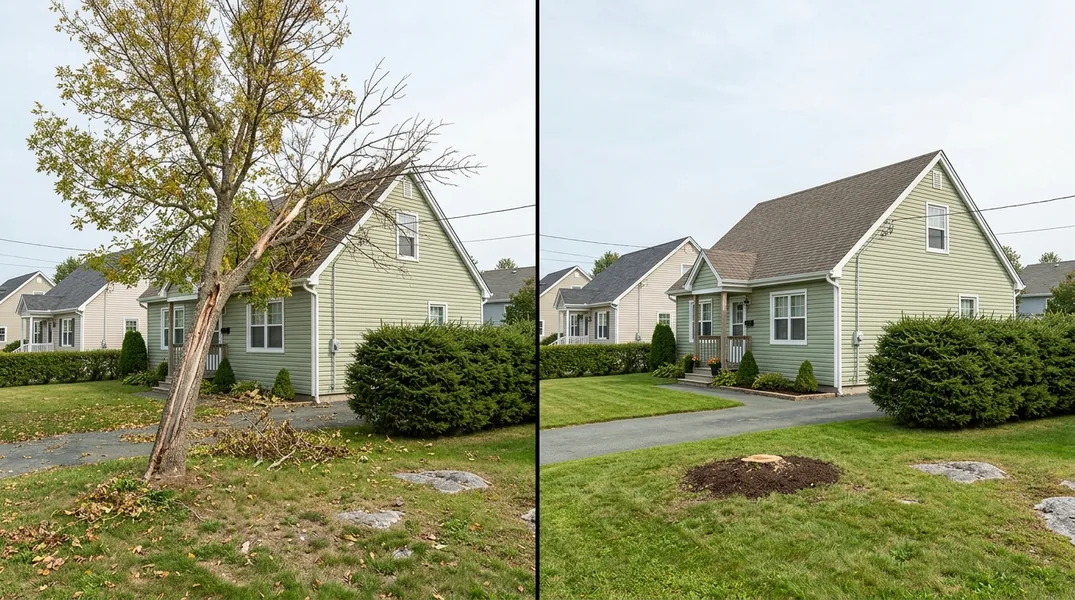
Tree Removal becomes urgent if the dying ash tree poses a safety hazard. A tree that is leaning, has large dead limbs overhanging your home or outbuildings, or is located near power lines should be removed promptly to prevent property damage or injury. In some cases, the City of Halifax may require a permit for private tree removal, and an arborist report documenting the condition of the tree can support your application and demonstrate that removal is necessary.
Once you have decided that removal is the best option, it is important to handle the debris responsibly. Firewood movement rules in Nova Scotia restrict the transport of ash wood to prevent further spread of EAB. Citadel Tree Trimming follows all local regulations regarding ash firewood movement and proper disposal, ensuring that infested material does not contribute to the pest's expansion into new areas. Contact us at (902) 700-2952 to discuss your options and get a free estimate for removal.
Ash Firewood Movement Rules and Responsible Disposal
Understanding ash firewood movement rules is crucial for anyone who has removed an ash tree or plans to do so. In Nova Scotia, regulations restrict the movement of ash wood, bark and debris to prevent the accidental transport of Emerald Ash Borer to uninfested regions. If your ash tree is confirmed or suspected to be infested, the wood cannot be moved off your property without special authorization, and even then, movement is typically prohibited except under very limited circumstances.
Proper disposal of infested ash wood is essential. On-site chipping or grinding is the preferred method when possible, as it renders the material unsuitable for beetle survival. If chipping is not feasible, the wood should be burned in a contained manner or buried on the property. Never sell or give away ash firewood or logs from trees in your area, as this is one of the primary ways EAB spreads to new locations. Professional tree services like Citadel Tree Trimming are familiar with these regulations and will ensure that all debris from your ash tree removal is handled in compliance with provincial guidelines.
Taking Action: Next Steps for Ash Tree Protection in Halifax
If you own ash trees in Halifax and have not yet assessed their health, now is the time to act. The longer you wait, the more likely it is that infestation will progress beyond the point where treatment can save the tree. A professional arborist can inspect your ash trees, identify any signs of EAB damage, and recommend the most appropriate course of action, whether that is treatment, monitoring, or removal.
Citadel Tree Trimming offers comprehensive ash tree assessment and management services throughout Halifax. Our ISA Certified Arborists have the expertise to diagnose EAB infestation accurately and discuss your options in detail. Whether you are looking to save a valuable ash tree through treatment or need to arrange safe removal and disposal, we are here to help. Contact us today at (902) 700-2952 or visit https://halifax-tree-trimming.ca to request a free estimate and protect your property from this destructive pest.
Looking for a professional in Halifax? Citadel Tree Trimming responds quickly for all your tree trimming needs.
Get a free estimateOur services : Tree Removal · Tree Trimming · Tree Pruning