



Tree trimming in Halifax keeps your maples, oaks and spruce healthy while protecting your property and power lines. The Halifax area's mature street trees, ravine lots and tight backyards demand precision work and knowledge of local species. Citadel Tree Trimming has been removing deadwood, thinning crowns and reducing branches since 2014, using ISA Certified Arborists who understand in Halifax and the surrounding area's freeze-thaw cycles and storm damage patterns. We cut at the branch collar so wounds close properly and no stubs remain. Call us at (902) 700-2952 for a free estimate, or learn more about our tree pruning services.
Why tree trimming is essential in Halifax
Halifax's post-war subdivisions and newer neighbourhoods are filled with mature maples and oaks that shed branches without warning. Ice storms and summer windstorms bring down limbs that hang over decks, driveways and roofs. Overgrown crowns block light from reaching your house and garden, and dense foliage traps moisture that invites disease. Regular trimming removes dead or crossing branches, improves structure and reduces the risk of failure during the next storm.
- Remove dead branches before they fall on your roof or car.
- Thin the crown to let light and air reach your property.
- Reduce branch length where trees overhang power lines or your neighbour's fence.
- Improve the tree's shape so it sheds snow and ice more safely.
- Stop bark damage caused by rubbing or crossing branches.
Trimming done at the right time of year, using proper cuts, adds years to a tree's life and prevents costly removals later.
Local insight: A silver maple in Halifax's North End can shed 40 to 60 pounds of branches in a single ice storm. Crown thinning by 15 to 20 percent reduces that load and keeps the tree safer through winter.
How we trim trees in the Halifax area
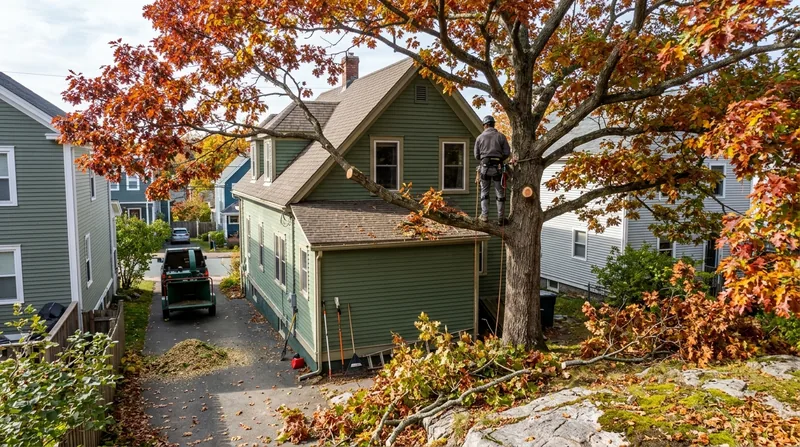
Our crews arrive with climbing gear, handsaws and chainsaws, and we work from the ground or from the canopy depending on the tree's height and the branch location. We start by identifying dead or diseased wood, then assess the crown's overall balance. Every cut is made just outside the branch collar, the swollen area where the branch meets the trunk, so the tree can seal the wound naturally. We do not leave stubs, flush cuts or torn bark.
- Inspect the entire crown and mark branches to be removed.
- Cut dead wood first, then crossing or rubbing branches.
- Thin the crown by removing weak or competing growth.
- Lower large branches in sections using ropes and pulleys.
- Chip all debris on site or haul it away.
- Clean up and remove all sawdust and bark.
The whole job typically takes four to eight hours depending on tree size and access. We respect property boundaries and work carefully around gardens, vehicles and structures.
Example: A 15-metre red oak in East Hants with a dense crown and three dead limbs takes about six hours. We lower each section by rope, chip the branches on site and haul away the chips. Cost starts at $495 depending on access and debris volume.
Trimming methods and when to use them
| Method | What it does | Best time and context |
|---|---|---|
| Crown thinning | Remove 10 to 20 percent of interior branches to improve light and air flow without changing the tree's overall shape. | Late fall to late winter (dormancy). Works on maples, oaks, spruce and birch across Halifax. |
| Crown reduction | Shorten branches back to side branches so the tree is smaller but keeps its natural form. Reduces wind load and clearance issues. | Late fall to late winter. Essential for trees overhanging power lines or neighbours' fences. |
| Deadwood removal | Cut out all dead, diseased or broken branches down to living wood or the branch collar. | Any time of year. Urgent after ice storms or windstorms. Prevents falling branches and disease spread. |
| Structural pruning | Remove crossing, rubbing or co-dominant branches to improve the tree's framework and reduce future failure risk. | Late fall to late winter. Critical for young trees and trees in tight spaces like Halifax's urban lots. |
The best time to trim most trees in Halifax is from late fall through late winter, when the tree is dormant and we can see the structure clearly. Cedar hedges are trimmed in late spring and summer to encourage new growth and maintain shape. After any ice storm or windstorm, deadwood removal cannot wait and is done immediately to prevent injury and further damage.
Permits and safety around power lines
The City of Halifax may require a permit for a private tree removal, and the same scrutiny can apply to significant trimming work on protected trees. An arborist report supports your permit application and documents the tree's condition and the work proposed. Rules and thresholds differ across the Halifax area and surrounding municipalities, so we always advise checking with your local government before starting.
If branches are near your electrical service entrance (the wires running from the pole to your house), we maintain safe approach distances and never cut into the public distribution network operated by in Halifax and the surrounding area Power. If a tree is actually touching the public lines, we refer the matter to in Halifax and the surrounding area Power and do not proceed. This keeps everyone safe and meets regulatory requirements.
All debris is chipped on site or hauled away, and we leave your property clean. For details on permits, regulations and safety in your neighbourhood, call us at (902) 700-2952 or visit our contact page to request a free estimate.
Seasonal timing for trimming in Halifax
Dormancy, from late fall to late winter, is the ideal window for crown thinning and structural pruning. The tree is not actively growing, so cuts heal better and there is less stress. You can also see the full branch structure without leaves in the way. Summer trimming is reserved for cedar hedges, which respond well to fresh growth after a June or July cut. Emergency deadwood removal happens year-round, especially after ice storms in winter and windstorms in summer.
If you are planning a major trim or have dead branches hanging over your deck, book your free estimate now. We work through the season and can often fit you in within two weeks. Call (902) 700-2952 or visit our pricing page to see what tree trimming costs and what is included.
Why hire an ISA Certified Arborist for trimming
Not all pruning is the same. Poor cuts leave stubs that rot, flush cuts remove the branch collar and slow healing, and topping (cutting the main stem) permanently damages a tree. Our ISA Certified Arborists know the biology of every species common in Halifax, from sugar maples and red oaks to Norway spruce and black locust. We understand how freeze-thaw cycles stress trees here and how to prune for resilience.
We are fully insured and carry liability coverage for all work. Our crews are trained in climbing safety, rope work and equipment operation. We arrive on time, work cleanly and finish the job the same day. If you want to learn more about our other services, explore our service areas or check out tree removal and stump grinding options as well.
Prices Tree Trimming in Halifax — Indicative pricing
| Service | Price | Details |
|---|---|---|
| Crown thinning (small tree, under 10 metres) | From $195 | Remove deadwood and thin interior branches to improve light and air flow. |
| Crown thinning (medium tree, 10 to 15 metres) | From $395 | Thin 15 to 20 percent of branches, improve structure and reduce wind load |
| Crown reduction (large tree, over 15 metres) | From $595 | Shorten branches back to side branches, reduce clearance issues and wind resistance |
| Deadwood removal (emergency or routine) | From $275 | Remove broken, diseased or dead branches after storms or anytime year-round |
| Free estimate | No charge | We visit your property, assess the trees and provide a detailed quote within 24 hours |
Indicative prices; free, personalized estimate within 24h at (902) 700-2952.