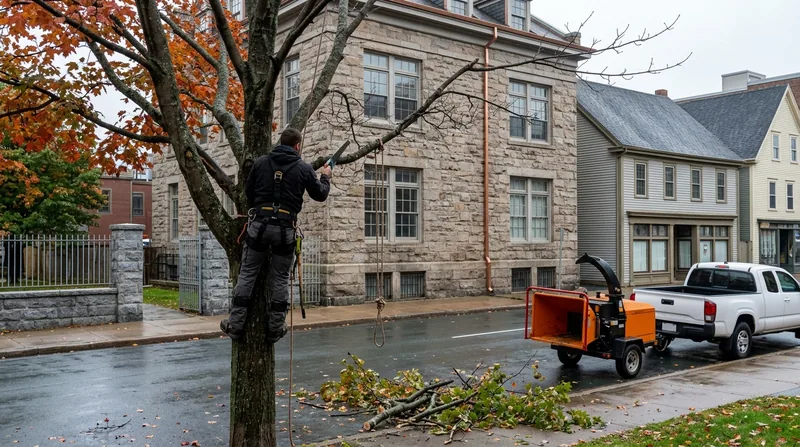




Deadwood and branch removal in Halifax targets the dead, broken and hanging limbs that threaten your property during the autumn storm season. Mature trees across Halifax neighbourhoods, from the North End to South End, shed weight-bearing branches every year, and a single failure can damage a roof, a fence or a parked vehicle. Our ISA Certified Arborists assess each tree quickly, remove the hazardous wood, and leave your canopy healthier and safer. This service is most effective when done in late fall through late winter, when trees are dormant and the work is cleanest. Call (902) 700-2952 for a free estimate, or visit our contact page to request a site visit.
Why deadwood removal matters in Halifax
Halifax's mature tree stock, dominated by silver and sugar maple, red and white oak, and Norway spruce, grows dense and heavy. Winter ice storms and summer windstorms stress these trees, snapping branches and leaving deadwood hanging. A branch that looks stable from the ground often tears away without warning, especially after freeze-thaw cycles in in Halifax and the surrounding area's climate. Removing that hazard before the storm season cuts your risk sharply.
- We identify dead limbs that will fail under wind or ice load.
- We remove broken branches that hang by bark alone.
- We thin crossing limbs that rub and weaken each other.
- We lower the overall weight of the canopy to reduce stress on the main trunk.
- We clean the wound collar to help the tree heal faster.
The result is a safer tree that sheds less debris and looks more balanced. In tight Halifax backyards, where a falling branch can reach a neighbour's property or the street, this work is not optional.
Local fact: A single oak branch 30 centimetres in diameter and 4 metres long can weigh 150 kilograms. After an ice storm in the Halifax area, we remove an average of 8 to 12 such branches per property that calls us.
How we remove deadwood safely
Our crew arrives with climbing gear, a bucket truck or a mobile elevated work platform (MEWP), and hand tools. We work from the ground up, assessing the tree's structure and identifying every piece of hazardous wood before we touch the first branch. In Halifax's ravine lots and steep-access properties, we adapt our equipment to the site. We chip all brush on the spot, haul away logs, and leave your yard clean.
- We inspect the crown from multiple angles to spot hidden cracks and cavities.
- We use climbing techniques to reach high branches safely and lower them under control.
- We make clean cuts at the branch collar to avoid flush cuts or leaving stubs.
- We chip all wood smaller than 15 centimetres and stack larger logs for removal.
- We sweep and remove all debris before we leave.
The whole job typically takes 2 to 4 hours for a standard residential tree. Larger trees or multiple trees in East Hants or West Hants may take a full day. We respect property lines and approach distances around private electrical service entrances, and we refer any tree touching in Halifax and the surrounding area Power's public distribution lines to the utility.
Real example: A 25-metre sugar maple in Downtown Halifax had three large dead branches and 12 smaller ones hanging inside the crown. Our crew removed them in 3 hours, chipped all brush on site, and stacked the logs for firewood. Cost was $385 all in, with no permit required because no live wood was removed.
Methods we use for deadwood removal
| Method | Description | When we use it |
|---|---|---|
| Hand pruning from the ground | Loppers, hand saws and pole saws for low branches and small deadwood. | Trees under 8 metres or deadwood in the lower crown. |
| Climbing with rope and harness | ISA Certified Arborist climbs into the crown with a chainsaw, lowering branches on a rope. | Mature trees 10 to 25 metres tall with deadwood in the upper crown. |
| Bucket truck (articulating boom) | Operator positions the bucket close to the branch, arborist cuts and lowers wood to the ground. | Trees 15 to 30 metres tall where street access and property width allow. |
| Combination approach | We use climbing for the upper crown and pole saws from the ground for lower branches, saving time and cost. | Most residential properties in Halifax and the surrounding area. |
Permits and safety around power lines in Halifax
The City of Halifax may require a permit for a private tree removal, and the rules vary across the Halifax area and surrounding municipalities. Deadwood removal alone typically does not trigger a permit because no live wood is cut, but we always confirm the status with the property owner before we start. If your tree is near power lines, we measure the approach distance carefully. Any branch touching in Halifax and the surrounding area Power's public distribution lines is referred to the utility, not removed by us. We work only on the customer's private service entrance and maintain safe clearance from all energized conductors.
We are fully insured and carry current liability coverage. Our ISA Certified Arborists follow industry safety standards for climbing, rigging and chainsaw work. All crew members wear hard hats, eye protection and high-visibility clothing on site. We clean up debris and haul it away, leaving your property ready to use.
When to schedule deadwood removal
Trimming and structural pruning are best done in dormancy, from late fall to late winter. During this window, the tree is not actively growing, sap is not flowing, and wounds heal faster in spring. Winter work also gives you a clear view of the crown once leaves are off. Emergency removals happen year-round, peaking with ice storms and summer windstorms, and we respond within 24 hours in Halifax. If you spot a hanging branch after a storm, call us at (902) 700-2952 for same-day or next-day service.
Spring and summer deadwood removal is possible but less ideal because the tree is in full growth and may bleed sap. However, if a branch poses an immediate safety risk, we do not wait for autumn. Our crew is on call seven days a week for emergency work.
For routine deadwood removal and structural pruning, book your free estimate in August or September so we can fit you in during the optimal dormancy window. Visit our tree trimming page to see how this service fits into a broader care plan for your trees.
Cost and next steps
Deadwood and branch removal costs depend on tree height, crown size, the amount of deadwood and site access. A small residential tree with light deadwood may cost from $70 to $150. A large mature oak or maple with heavy deadwood can range from $300 to $600. We never charge for the estimate, and our arborists give you a firm price on site with no hidden fees.
To get started, call (902) 700-2952 or fill out our contact form. We respond within 24 hours and can often visit within 48 hours. You can also view our full pricing guide for other services. Citadel Tree Trimming has been serving Halifax and the surrounding area since 2014, and every crew member is trained and insured.
Prices Deadwood & Branch Removal in Halifax — Indicative pricing
| Service | Price | Details |
|---|---|---|
| Small tree deadwood removal | From $70 | Up to 8 metres, light deadwood, ground access |
| Standard residential tree | From $250 | 8 to 15 metres, moderate deadwood, climbing or bucket truck |
| Large mature tree | From $400 | 15 to 25 metres, heavy deadwood, complex rigging |
| Multiple trees or large property | Custom quote | Free site assessment and firm estimate |
| Travel and setup | Included | No extra charge in Halifax and the surrounding area. |
| Free estimate | Always free | Call (902) 700-2952 or submit a request online |
Indicative prices; free, personalized estimate within 24h at (902) 700-2952.