



Maple, oak, birch and ash trees across Halifax face constant threats from decay fungi, cankers, boring insects and root disease. A tree disease diagnosis in Halifax begins with a thorough inspection of the crown, trunk, root flare and surrounding soil, followed by a written recommendation to treat, prune or remove. Citadel Tree Trimming's ISA Certified Arborists have diagnosed and managed tree health issues across Halifax and the surrounding municipalities since 2014. Early identification of disease saves trees, prevents liability and protects your property. Call us at (902) 700-2952 for a free estimate.
Why tree disease diagnosis matters in Halifax
Halifax's mature street trees, ravine lots and dense residential neighbourhoods create ideal conditions for fungal infections, storm damage and insect colonization. A diseased tree can decline rapidly, drop branches without warning or fail entirely during an ice storm or windstorm. Early diagnosis prevents costly emergency removal and identifies trees worth preserving through targeted treatment or pruning. Many property owners mistake early decline for normal aging, missing the window for intervention.
- We inspect the crown for cankers, discoloration and branch dieback that signal internal decay.
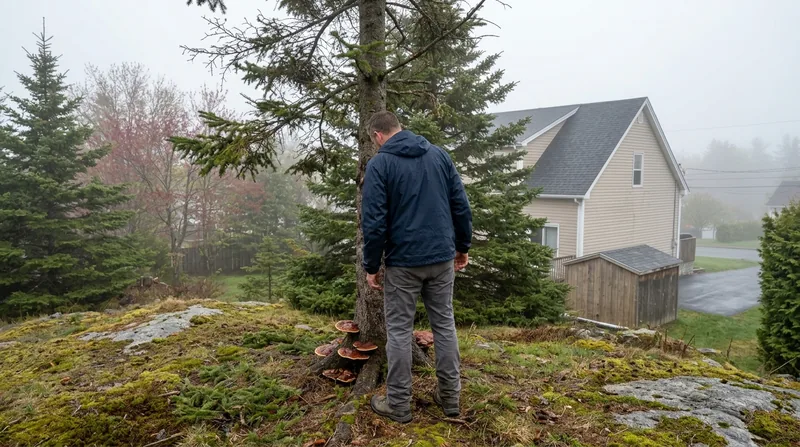
- We examine the trunk and root flare for fungal fruiting bodies, sunken bark and hollowing.
- We assess soil compaction, root damage and drainage issues that weaken the tree's foundation.
- We identify boring insects such as emerald ash borer larvae and other wood-boring pests.
- We deliver a written report with treatment options, pruning strategy or removal recommendation.
A clear diagnosis gives you confidence in your decision and protects your investment in the landscape.
Local insight: Emerald ash borer has killed thousands of ash trees across in Halifax and the surrounding area. Early diagnosis of EAB infestation allows us to recommend preventive injection treatment in late spring or early summer, when the window for saving the tree remains open. Without diagnosis, ash decline goes unrecognized until removal is the only option.
How we diagnose tree disease in the Halifax area
Our process combines visual inspection, hands-on assessment and professional judgment honed over a decade of work in Halifax's climate and soil conditions. We climb or use aerial access to inspect the upper crown closely, probe the trunk for soft wood, and evaluate the root system where it emerges from the soil. We document findings with photographs and deliver a written report within two business days.
- We perform a site visit and visual inspection of all accessible parts of the tree.
- We use a resistance drill or increment borer to detect internal decay and soft wood.
- We photograph symptoms and document the tree's GPS location and species for your records.
- We compile a written diagnosis with treatment, pruning or removal recommendations.
- We discuss next steps and connect you with tree removal, tree trimming or emerald ash borer treatment services if needed.
The report is written in plain language and includes enough detail to support a permit application if the City of Halifax requires one for removal or major pruning.
Real example: A homeowner in Halifax noticed a large red oak shedding bark and dropping branches. Our diagnosis identified advanced decay from a storm wound sustained five years earlier. We recommended removal before the tree failed onto the house, and documented the risk in writing. The report supported the permit application and provided the homeowner's insurance company with clear evidence of the hazard.
Diagnosis methods and what each reveals
| Method | What it detects | When we use it |
|---|---|---|
| Visual inspection | Cankers, discoloration, branch dieback, fungal fruiting bodies, crown thinning, sunken bark. | Every diagnosis; performed from ground and climbing height. |
| Resistance drilling | Internal decay, hollow sections, soft wood pockets where fungi have colonized heartwood. | When decay is suspected in the trunk; minimal damage to the tree. |
| Root collar excavation | Root damage, girdling roots, soil compaction, root rot, proper root flare exposure. | When decline suggests a root problem; we carefully expose and rebury the root zone. |
| Increment boring | Growth rings, heartwood decay, the tree's age and recent vigour; small core sample. | When precise decay mapping is needed; used sparingly on valuable trees. |
Each method leaves minimal damage and is performed only where it yields actionable information. Our goal is diagnosis, not further injury to an already stressed tree.
Common tree diseases we diagnose across Halifax
Halifax's cool, moist climate and clay soil favour certain fungal pathogens and insect pests. Sugar and silver maple are prone to anthracnose and verticillium wilt; oak species suffer from oak wilt and root rot in poorly drained sites; ash trees across in Halifax and the surrounding area are decimated by emerald ash borer. Birch canker, bronze birch borer and various root rots also thrive here. Our arborists recognize these conditions and recommend the best course of action, whether treatment, pruning or removal.
If a diseased tree is located near your house, garage or power lines, diagnosis is especially urgent. A tree that fails or sheds large branches creates liability and safety risk. An arborist report documents the hazard in writing and supports your insurance claim or permit application.
Next steps after diagnosis
Once we deliver the written diagnosis, you have clear options. If the tree is saveable, we recommend targeted pruning, cabling, bracing or chemical treatment (such as emerald ash borer injection). If decline is advanced or the tree poses a hazard, we schedule removal and stump grinding. If the diagnosis requires a permit from the City of Halifax, our report provides the documentation the city needs to process your application. We handle every follow-up service in-house, so there is no delay or coordination hassle.
Contact us at (902) 700-2952 or visit our contact page to book your free estimate. We respond within 24 hours and can often schedule an inspection within two business days.
Prices Tree Disease Diagnosis in Halifax — Indicative pricing
| Service | Price | Details |
|---|---|---|
| Tree disease diagnosis (small to medium tree) | From $150 | Crown, trunk and root inspection with written report |
| Tree disease diagnosis (large or complex tree) | From $250 | Climbing access, resistance drilling and detailed analysis included |
| Multiple trees on one property | From $300 | Discounted rate for 3 or more trees assessed in one visit |
| Diagnosis with site visit and report | From $150 | Includes photographs, GPS location and treatment recommendations |
| Free estimate and consultation | Free | Call (902) 700-2952 or book online; no obligation |
Indicative prices; free, personalized estimate within 24h at (902) 700-2952.